Have any question?
Call (409) 861-4450

Call (409) 861-4450


Nowadays, it’s common for business tools to incorporate AI into their already helpful features. Google Docs is a prime example. As of the time of this writing, Google has recently added a “Help me create” function that can help you get a start on your next project.
Let’s take a look at how it works and how you could potentially utilize it to your advantage.

When you think of business technology, what’s the impression you get? Do you look at it as a pain in the neck obligation, an unavoidable cost, or one of your most valuable assets?
For many, it is the former… but for the most successful among us, it is the latter. Let’s talk about how you can use your technology to optimize your incoming cash flow.
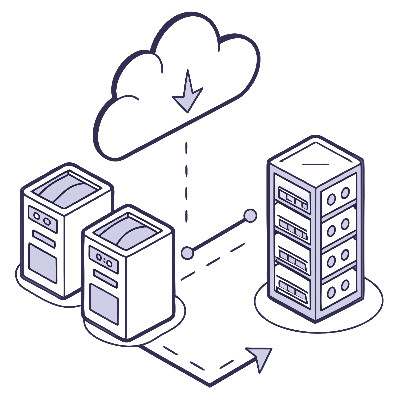
Most business owners I talk to have some form of backup. Maybe it's an external drive plugged into a server, or perhaps everything is saved in the cloud. While these are great starts, they often have a single point of failure. If your office has a fire, that external drive is gone. If a user accidentally deletes a folder and it syncs to the cloud, that data might be gone before you notice.
To make a backup "trustworthy," we use a framework called the 3-2-1-1 Rule. It sounds like a football play, but it’s actually a recipe for peace of mind.

It’s almost impossible to find a workplace these days where mobile devices aren’t part of the furniture. We use them for everything from checking email between meetings to approving contracts while waiting for a latte. When done right, giving your team the ability to work from anywhere is a massive win for productivity.

Cybersecurity can often feel like a complex web of buzzwords, but professionals actually rely on a simple framework called the CIA Triad to stay safe. This doesn't refer to the intelligence agency; instead, it stands for Confidentiality, Integrity, and Availability. You can think of these three pillars as the locks, the reinforced walls, and the key to the vault. If any one of these pillars fails, the entire system is at risk.
As your team expands, so does your digital footprint. Managing who has access to your company’s financial records, customer data, and internal systems quickly shifts from a simple task to a significant liability that takes time and effort to manage.
Without a centralized strategy, your business becomes vulnerable to a lot of problematic situations. This occurs when employees accumulate access rights over time, often retaining permissions from previous roles or temporary projects that they no longer need. This simple problem actually creates security holes in your network and increases the risk of a data breach that could compromise your reputation and your revenue.

The workplace is an interesting environment. Not only is it a place where numerous people with vastly different personalities are kept in close proximity, but it also actively forces them to interact with one another—and a lot, too. It is also important to recognize that the conversation there is a unique blend of professional and interpersonal elements. This is the case whether the office is a physical space or a digital concept.
Of course, as with any environment, there are stressors that complicate things and insert friction into the workplace. Let’s discuss how the tools you use to communicate can help smooth over this friction, if used correctly.

Back in the early 2000s, a “tech guy” like a neighbor, a cousin, or a solo freelancer, was often enough to keep a small office running. Nowadays, it’s an entirely different ballgame. The landscape of business technology has shifted so dramatically that you need a strategic professional managing your IT, not an amateur, but not for the reasons you might expect.

On March 23, the Federal Communications Commission announced its intention to ban the sale of all foreign-made Wi-Fi routers moving forward, with manufacturers able to apply for a conditional approval exemption on the FCC’s website. While this will obviously have an impact on businesses of all shapes and sizes, it may not be the one you’d expect.
Let’s talk about what this ban means, both in terms of its requirements and in relation to your business. Spoiler: it’s going to get complicated.

Think about your monthly calendar. How many blocks of time are swallowed up by back-and-forth emails and technical disputes with service providers? Most leaders find themselves acting as an unpaid mediator between their own vendors; a role that frustratingly offers zero ROI.

Realistically, the biggest cyberthreats you are likely to face will be born within your office. This is not to say that you’ve actually hired a team of cybercriminals posing as good-intentioned employees… In many cases, the issue actually stems from how good-natured your employees are.
In their drive to prove their worth, these team members can develop habits that counterproductively harm your organization. Let’s dive in and discuss a few ways this happens, and what can be done about it.

We all know that person who is just a little too comfortable with artificial intelligence. The one that is always talking about—and to—the LLM they use. The one that is always mentioning the prompts they created.
The danger isn't just that the AI is smart; it’s that the AI is extremely sycophantic. It is programmed to agree and to validate. When a chatbot stops challenging you and starts reinforcing your every whim, you aren't gaining an assistant, you’re losing touch with reality.

It’s a common scene in many offices: the accidental IT person. They were hired to handle your marketing or manage your sales, but because they happen to know how to fix a printer or reset a password, they’ve become the unofficial tech support.
While this might seem like a quick fix, it’s actually a silent growth killer for your business. Here is why relying on the office tech whiz is holding you back; and how a professional approach can fuel your success.

Project yourself one whole year from today. Now imagine that you’ve maintained 99.9 percent uptime for the entire year. What would a year of relentless, focused expansion do for your business compared to having your progress stymied at every turn by constantly fighting with your technology?

Silence is rarely golden—it’s usually a warning sign. Imagine flying a plane through a storm with a blindfold on; that’s exactly what it feels like to run a modern enterprise without a robust monitoring strategy. Whether you're scaling a global cloud infrastructure or managing a delicate web of customer data, reporting and alarms are the digital nervous system that keeps your operation alive. They are the difference between discovering a system failure via a frantic 2 a.m. client call and catching a glitch before it ever touches a customer.

That “checkmark” signaling a successful backup is less a guarantee of safety and more of a dangerous illusion. Many business owners might be under the impression that their data is safe simply because they got the email confirming that files have been copied to the cloud. But this is far from the truth, and you need to understand that there’s a significant difference between “having” a backup and “restoring” a backup.

Is your office still housing a server closet? If so, you’re likely sitting on the most expensive, non-productive square footage in your building. Between the specialized cooling costs, the constant hardware maintenance, and the looming threat of mechanical failure, physical servers have become an expensive anchor for the modern business.
Forward-thinking companies are ditching the hardware in favor of the cloud—a solution that eliminates your physical footprint while maximizing your agility.
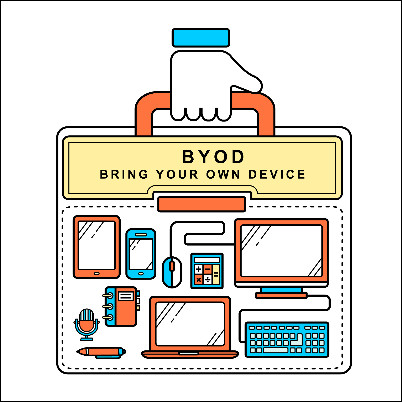
The dream of a company-only device policy died about five minutes after the first smartphone hit the market. Whether you officially allow it or not, your team is likely checking Slack from their sofas and answering emails in the grocery line on their personal phones.
Bring Your Own Device (BYOD) is no longer a perk; it’s the standard. But without a solid strategy, it’s also a security nightmare waiting to happen. Here is how to embrace the flexibility of BYOD without handing the keys to your kingdom to every malware-laden app on the app store.

There’s a lot of hardware in the modern business setup, and most of it is computerized to some degree. As such, ridding your business of any of it has become a more involved process than it once was… all in the name of data security.
The simple fact is that more devices than ever have memory, which can easily cause serious problems if you are not careful.

It is tempting to call the family tech genius when your office Wi-Fi acts up. Whether it is a niece who builds gaming rigs or a friend who is good with computers, leaning on a hobbyist for business infrastructure seems like a great way to save a few bucks.
In reality, it is one of the most expensive mistakes a business owner can make. Here is why mixing family favors with professional IT is a recipe for disaster.
Get the Knowledge You Need to Make IT Decisions
Technology is constantly evolving, and keeping up can feel overwhelming. Whether you want to understand cybersecurity threats, explore automation, or learn how regulations like PCI DSS impact your business, we’ve made it easy to access clear, straightforward insights on key IT topics.
Learn more about what NetWorthy Systems can do for your business.
NetWorthy Systems
701 W. Division Ave Suite 100
Orange, Texas 77630